
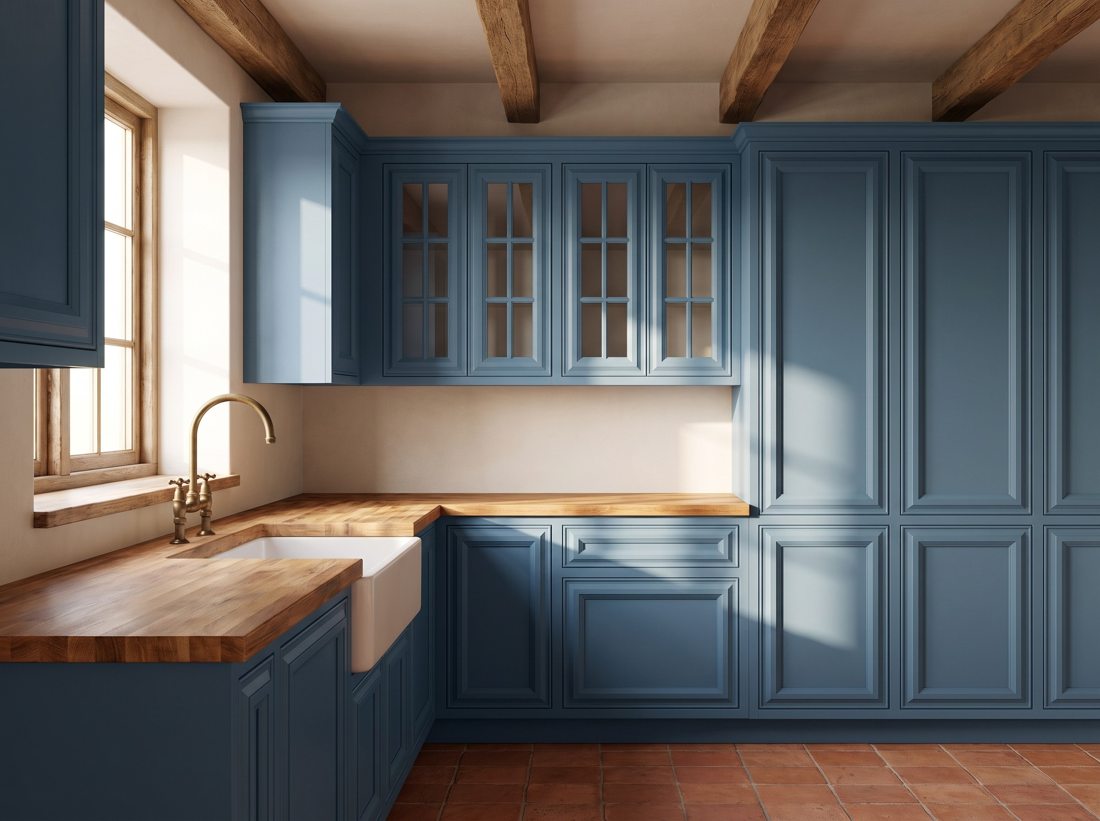
When boxes are sound, replacing doors and drawer fronts delivers 80% of the visual renovation for a fraction of the cost and disruption — a two-day install instead of a three-week gut. For contractors, refacing is repeat, high-margin work. Here is how to run it with lacquer fronts.
When refacing is the right call
Check three things: the boxes are square and dry, the layout works for the client, and the hinge system is standard 35 mm cup. If all three pass, the kitchen is a refacing candidate. Water damage at the sink base or a layout the client hates means a bigger conversation.
Measuring that prevents callbacks
Measure every opening, not just one “typical” door — old kitchens drift. Record width × height per front, overlay type, and hinge positions. Photograph each elevation with a tape in frame. We produce doors to millimetre spec, so the survey is the whole game.
Making old boxes look custom
Matched end panels, new toe kicks and a crown or scribe in the same lacquer turn visible carcass edges into a finished look. Add soft-close hinges and full-extension runners while the fronts are off — clients feel that upgrade every day.
Quoting it
Price per front plus panels and mouldings, with your install day rate on top. With our trade pricing and volume tiers, a 30-front refacing typically quotes at a number that closes on the first visit — bring the catalog and let the client choose the design in their own kitchen.