
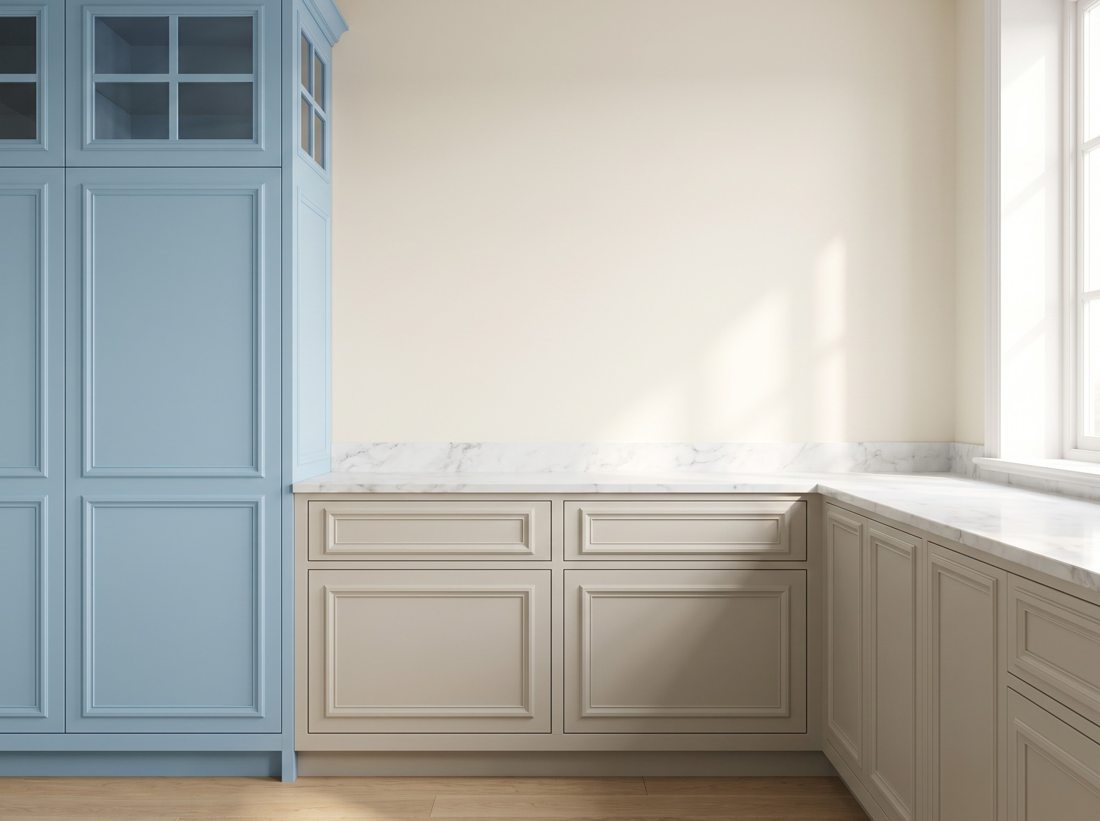
Site-painted wood doors have romance; factory lacquer has physics. Both give you a painted kitchen — they behave very differently over ten years.
Finish quality out of the gate
A spray booth lays lacquer in even, dust-free coats that cure hard; brush or roller work on site always shows some texture and stays softer for weeks. If the client runs a hand across the door and expects glass-smooth, that is a booth finish, not a brush finish.
The joint-cracking problem
Painted five-piece wood doors almost always develop hairline cracks where stiles meet rails — solid wood moves with seasons and paint films crack over the joint. Lacquered MDF is dimensionally stable, so framed profiles are machined from one piece and there is no joint to crack.
Cost and repaint cycles
Site painting looks cheaper until you price the second repaint. Factory lacquer typically lands between site-painted and bespoke joinery up front, then runs 10–15 years without attention; chips are touch-up sprayed rather than requiring a full repaint.