
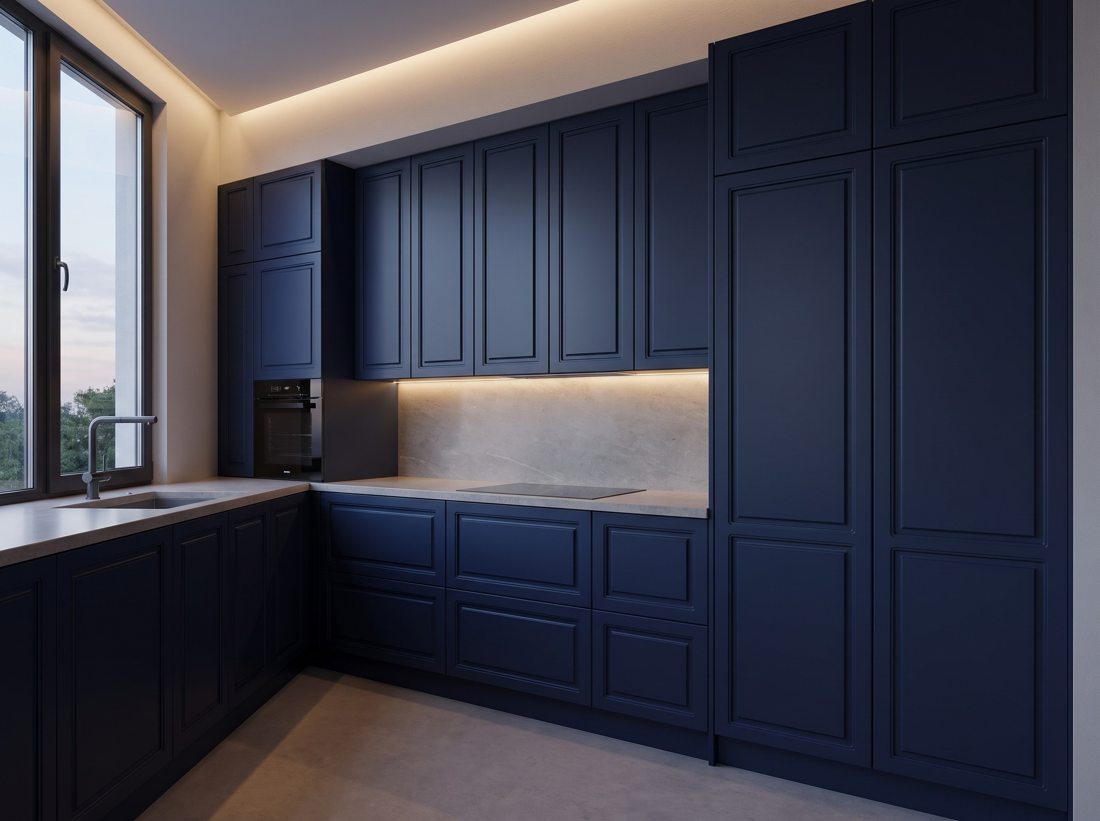
If you build or spec kitchens for a living, the door front decision shapes everything the client sees. The two finishes that dominate quotes today are lacquer (painted and baked finish over MDF) and thermofoil, also called membrane or vinyl-wrapped doors. They can look similar in a showroom — they do not age the same way.
How each finish is made
A lacquer door starts with a CNC-profiled MDF panel that is primed, sanded and sprayed in several coats of polyurethane or acrylic lacquer, then cured. The result is a continuous painted skin — matte, satin or high gloss — that wraps every edge. A thermofoil door takes the same MDF panel but vacuum-presses a thin PVC foil over the face and edges with adhesive.
Durability and repairability
Heat is the classic thermofoil failure: foil near ovens, ranges and even south-facing windows can lift and peel at the edges, and once it lifts there is no field repair — the door is replaced. Lacquer takes decades of normal kitchen life; when a chip does happen, it can be touch-up sprayed on site and blended invisibly. For rental units and hard-use commercial projects, that repairability is a real cost difference.
Colour and design freedom
Thermofoil limits you to the foil library the presser stocks. Lacquer is mixed to order — any RAL code, any sheen. That matters when a designer hands you a specific colour, or a client wants the island one shade deeper than the perimeter. Every profile in our Door Collection is lacquered to specification.
Where the price argument really lands
Thermofoil is usually quoted cheaper up front. But when you price a realistic 25–35 door kitchen with a factory-direct lacquer program, the gap narrows dramatically — and the lacquer kitchen still looks factory-fresh when the thermofoil kitchen is showing edge lift. If you have a current thermofoil or lacquer quote in hand, send it to us; our trade pricing usually surprises people.