
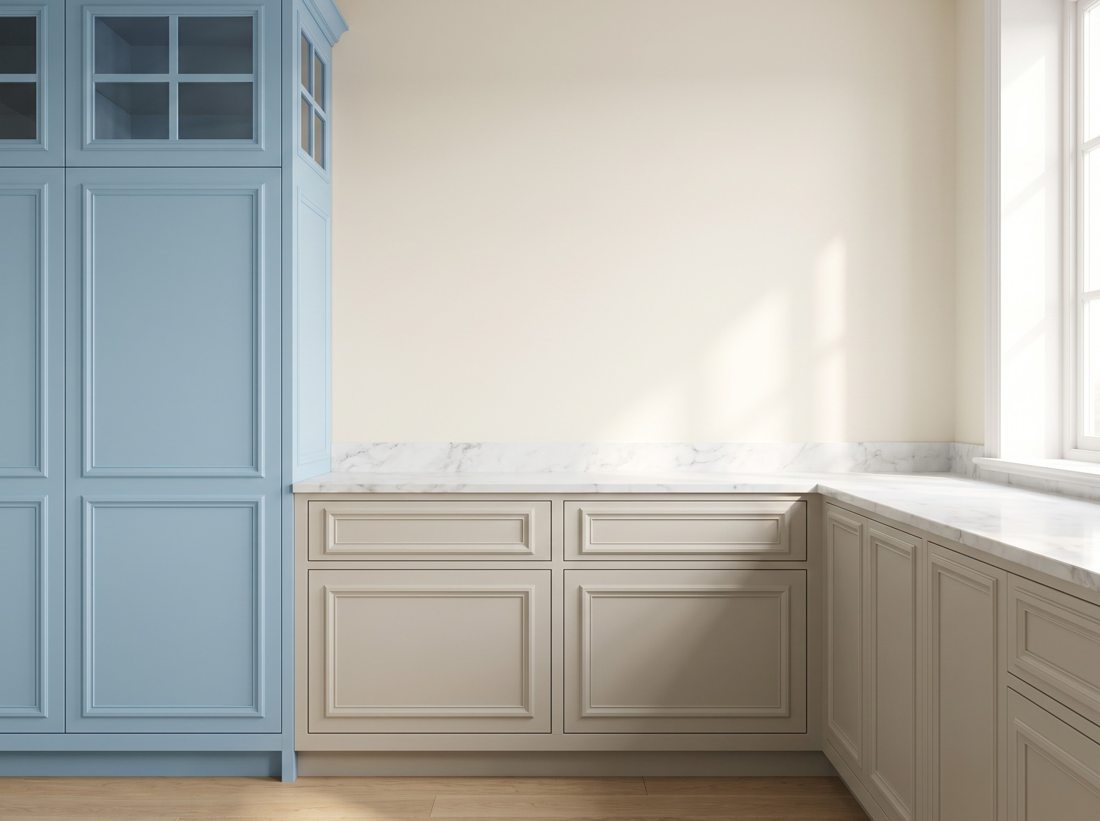
Clients hear 'MDF' and think budget. For painted finishes, the opposite is true: premium European brands spray on MDF by choice, not economy.
Wood moves, paint cracks
Solid wood expands and contracts across the grain with every season; on a painted five-piece door that guarantees hairline cracks at every joint within a couple of years. High-density MDF is stable in all directions — profiles are machined from a single panel, so there is simply no joint to open.
Machining quality
Fluted textures, arched panels and crisp inner profiles cut cleaner in MDF than in wood, which tears out along grain. Every textured design in our collection exists because the substrate machines like butter and holds edges.
Moisture, weight and screws
Modern MR-grade MDF handles kitchen humidity comfortably under a sealed lacquer skin. It is heavier than softwood — hinges hold superbly — and edge screw-holding is engineered around with proper hinge boring.