
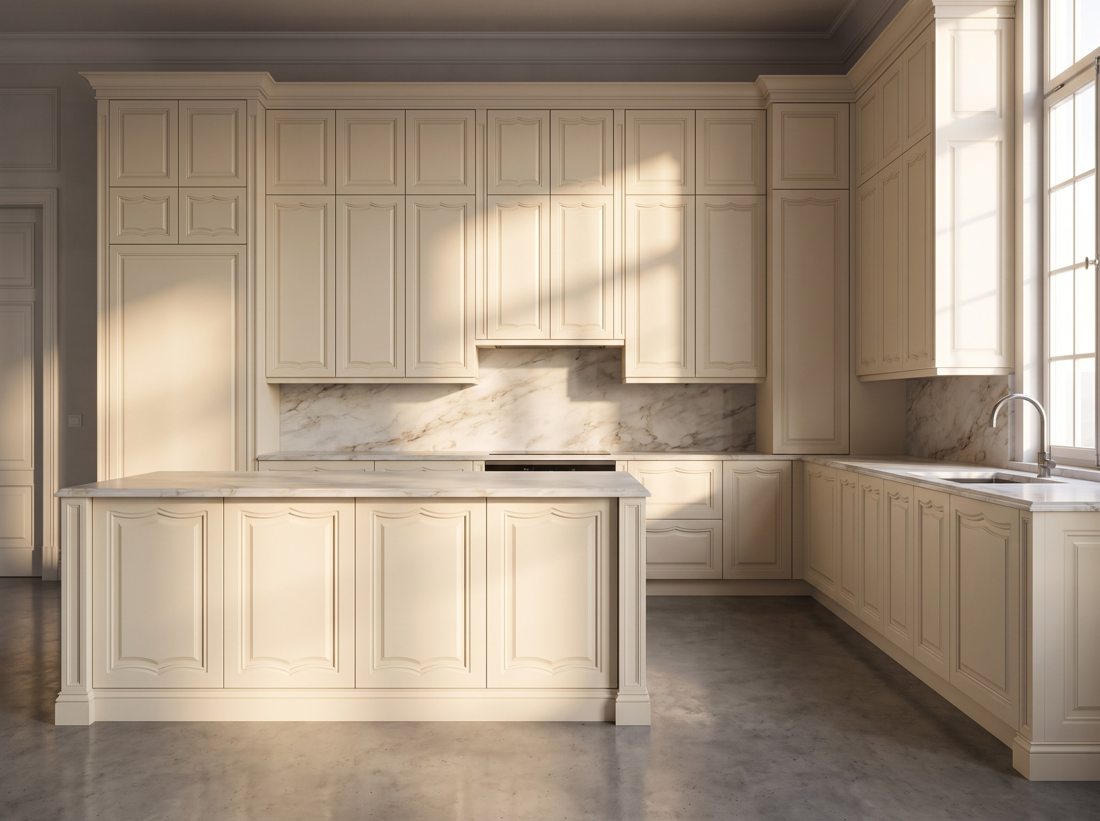
Every painted-kitchen horror story starts the same way: occupied home, plastic sheeting, a sprayer in the garage. The alternative is removing doors to a booth — ours.
Environment is everything
Finish quality is 80% environment: filtered air, controlled temperature, flash-off time between coats, dust-free cure. A kitchen under renovation offers none of that, which is why site jobs show nibs, texture and soft film.
Adhesion and longevity
Site coats over degreased-but-old surfaces rely on scuff adhesion and fail first at edges and grab zones — usually within a few years. Factory systems prime and bake on raw substrate; the film is engineered as one package.
The middle path that works
Keep the boxes, replace the fronts: new factory-lacquered doors on existing carcasses cost near a quality site respray and outlast it several times over. That is the refacing program most of our contractors sell.