
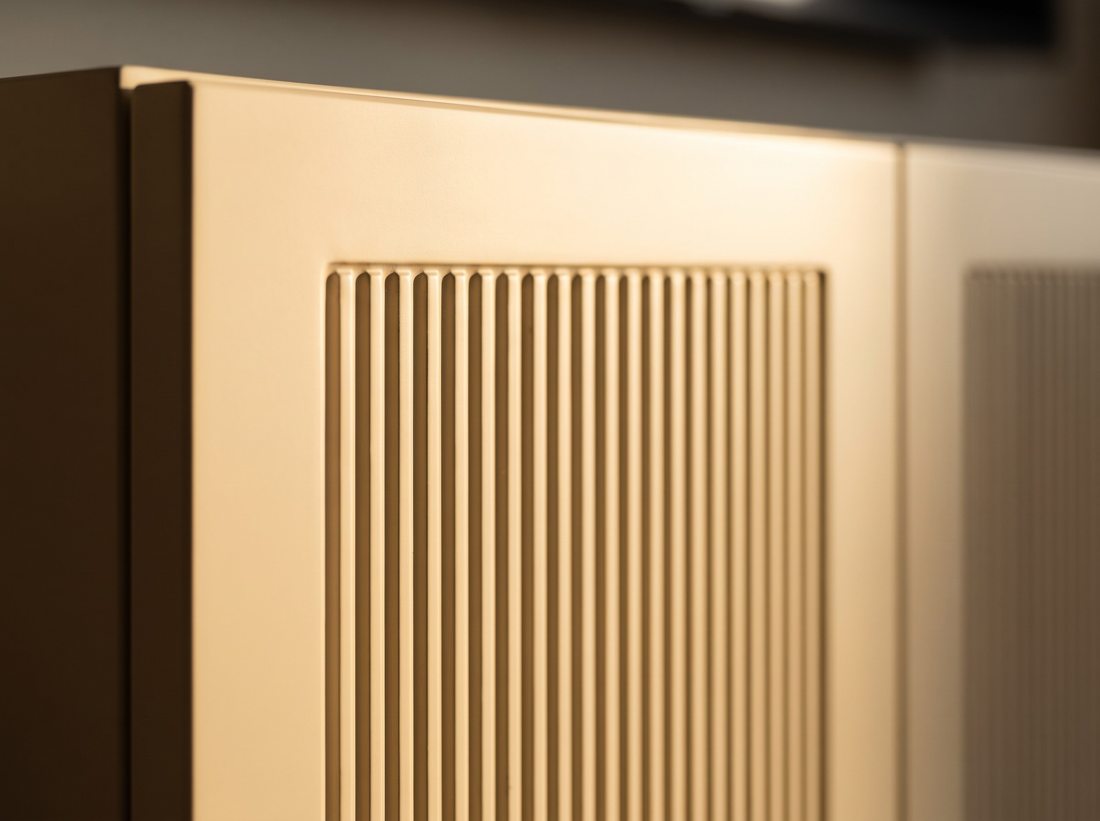
A decade ago 'water-based' meant compromise. Modern 2K waterborne polyurethanes changed the equation — and your client's nose notices.
Durability today
Catalysed waterborne systems now match solvent lacquers for scratch, chemical and blocking resistance in kitchen service. The old advice to avoid them is out of date.
Yellowing and whites
Solvent-borne finishes amber subtly with age — visible on whites and pale creams within years. Waterborne systems are non-yellowing, which is why bright whites and pastels should be specified waterborne by default.
VOCs and site sense
Lower VOC content means faster odour dissipation and easier compliance for occupied renovations, condos and LEED-minded projects. Solvent systems retain an edge in very high-gloss polishing work.
MORE IN
COMPARISONS